

This year I stopped submitting my wedding work to publications.
Not because I fell out of love with the craft.
But because I fell deeper into the reason I started.
For a long time, publication was a marker. A quiet nod that said you’re doing something right. It meant my work lived up to an external standard—curated, considered, deemed worthy of being archived somewhere beyond my own hard drive. For a season of my career, that mattered deeply. It helped me find my voice. It sharpened my eye. It taught me how to edit with intention.
But somewhere along the way, the question I was asking myself changed.
It shifted from:
Will this be recognized?
to:
Will this be remembered?
And those are not the same thing.
The subtle shift no one talks about
There is a quiet pressure that comes with shooting for recognition. You begin to see moments not only as they are, but as how they might read to someone else. You think about how an image will land on a grid, how it fits into an aesthetic conversation, how it compares.
That pressure doesn’t announce itself. It simply nudges your decisions.
What gets photographed.
What gets lingered on.
What gets edited out.
At some point, I realized I had been aiming outward.
This year, I felt a pull inward.
Toward the couple.
Toward the room.
Toward the moments that will never trend—but will matter for decades.
Recognition is loud. Preservation is quiet.
Recognition is immediate.
Preservation reveals itself slowly.
One rewards you quickly. The other only shows its value years later—when a photograph becomes proof of how something felt, not just how it looked.
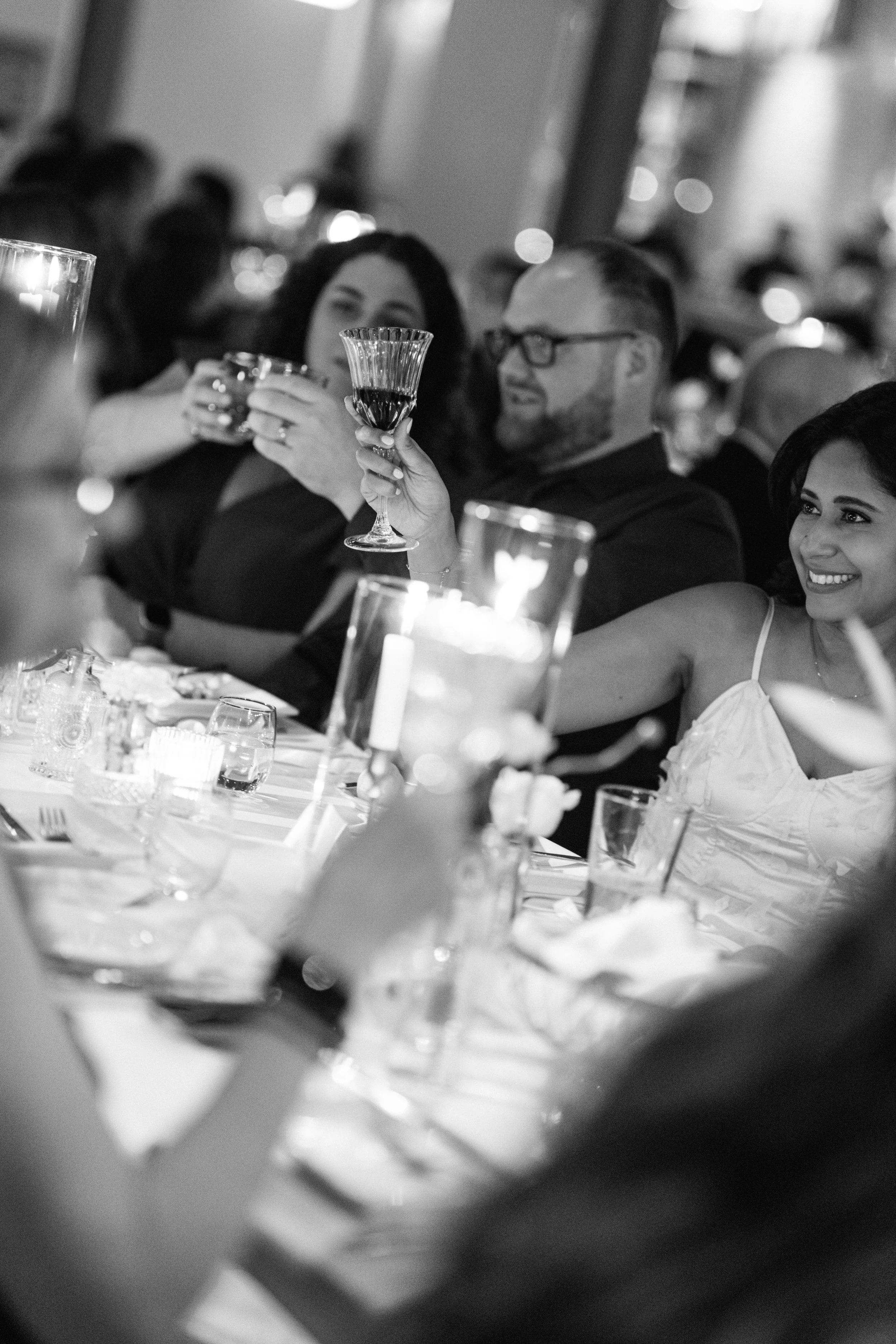
I think about hands resting on shoulders during speeches. About parents watching from the edges of the room. About the way people hold each other when they don’t know they’re being watched.
Those moments are not always the ones that get published.
But they are the ones that get kept.
Weddings are not content. They are records.
A wedding day is one of the rare moments in adult life when people from every chapter gather in one place, at one time, for one reason. That alone makes it historically significant.
And yet, somewhere along the line, weddings became content—optimized, styled, packaged for consumption.
When I stopped submitting my work, something shifted in how I photographed. I stopped asking whether an image was impressive and started asking whether it was true.
True to the couple.
True to the energy of the day.
True to what actually unfolded.
The audience I care about now hasn’t been born yet
This may sound dramatic, but it’s honest.
I think about future children and grandchildren opening albums, not feeds. About photographs being held, not scrolled. About stories being told because an image existed—not because it performed well.
Preservation is an act of faith. You don’t always know who will need the photograph, or when. You only know that it matters that it exists.
That belief has reshaped how I work.
I linger longer.
I photograph more quietly.
I let moments breathe instead of chasing them.
Letting go of the external compass
This wasn’t a rejection of publications. It was a release of dependency.
When you stop aiming for recognition, you gain a different kind of freedom. You’re no longer trying to prove something. You’re trying to hold something.
It reminds me why I picked up a camera in the first place: not to be seen, but to see.
What I hope my work becomes
I hope my photographs age well.
I hope they feel honest long after trends shift.
I hope they help people remember details they didn’t know they’d forget.
I hope they become part of a family’s visual language, pulled out during hard seasons, celebrations, and ordinary afternoons.
That kind of legacy doesn’t need a byline.
This year, I stopped submitting my wedding work to publications.
Not because the work became smaller—but because the purpose became bigger.
I am no longer documenting weddings to be recognized.
I am documenting them to be preserved.
And that feels like coming home—to the work, and to myself.
All the love,
Carol